


GENERAL OCCUPATIONAL THERAPY SERVICES
Occupational therapy supports whole-person function by addressing how the nervous system, movement, sensory processing, cognition, and emotional regulation work together to support daily life. Rather than focusing on a single skill or diagnosis, OT looks at the underlying factors that influence participation in activities of daily living (ADLs) and instrumental activities of daily living (IADLs), such as feeding, dressing, sleep, play, learning, work, and self-care. A common misconception is that OT is only for handwriting or school support, when in reality it spans the lifespan and addresses challenges that show up at home, in the community, and across routines. Therapy is individualized and may include movement-based intervention, hands-on support, environmental strategies, and caregiver or client education. OT supports infants developing foundational regulation and motor skills, children building independence and coordination, and adults seeking improved comfort, efficiency, and participation. OT focuses on the “why” behind functional challenges. By treating the whole person rather than isolated symptoms, occupational therapy supports meaningful, sustainable participation in daily life.

GENERAL OCCUPATIONAL THERAPY SERVICES
Occupational therapy supports whole-person function by addressing how the nervous system, movement, sensory processing, cognition, and emotional regulation work together to support daily life. Rather than focusing on a single skill or diagnosis, OT looks at the underlying factors that influence participation in activities of daily living (ADLs) and instrumental activities of daily living (IADLs), such as feeding, dressing, sleep, play, learning, work, and self-care. A common misconception is that OT is only for handwriting or school support, when in reality it spans the lifespan and addresses challenges that show up at home, in the community, and across routines. Therapy is individualized and may include movement-based intervention, hands-on support, environmental strategies, and caregiver or client education. OT supports infants developing foundational regulation and motor skills, children building independence and coordination, and adults seeking improved comfort, efficiency, and participation. OT focuses on the “why” behind functional challenges. By treating the whole person rather than isolated symptoms, occupational therapy supports meaningful, sustainable participation in daily life.
1. General OT Skills

We build the sensory, motor, and developmental foundations needed for confident participation in daily routines across the lifespan.
General OT skills support how individuals move, attend, organize their bodies, and complete everyday tasks at home, school, and work. Challenges may appear as difficulty with fine motor skills, postural control, self-care routines, emotional regulation, or task sequencing, and they often look different depending on age and developmental stage. When these foundational skills are inefficient, daily activities require more effort and can lead to frustration or avoidance. Occupational therapy strengthens these skills using developmentally appropriate, meaningful activities to promote independence, confidence, and smoother participation in daily life.
2. Reflex Integration

We address retained primitive reflexes that interfere with posture, coordination, regulation, and learning.
Primitive reflexes are early movement patterns that should integrate as the nervous system matures, but when they remain active they can disrupt motor control, emotional regulation, posture, and attention. These patterns may affect infants’ motor milestones, children’s handwriting and learning, or adults’ posture and pain patterns. Retained reflexes cause the body to rely on compensatory movement and increased effort. Reflex integration therapy uses rhythmic movement, sensory-motor activities, and developmental sequencing to help the nervous system organize these patterns for more efficient, automatic function.
3. Sensory-Motor Integration
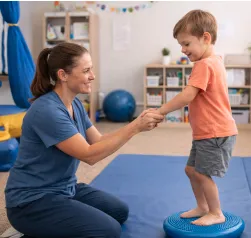
We help the nervous system process sensory input more effectively so the body can stay regulated, coordinated, and ready to engage.
Sensory processing challenges can affect regulation, attention, movement, and emotional responses across all ages. When the brain struggles to interpret sensory input, individuals may appear overreactive, underresponsive, or constantly seeking movement or input. These challenges can impact sleep, feeding, learning, transitions, and behavior. OT uses movement, vestibular and proprioceptive input, environmental strategies, and regulation tools to help the sensory systems work together and support calmer, more organized participation in daily life.
4. Gross Motor Strength & Coordination
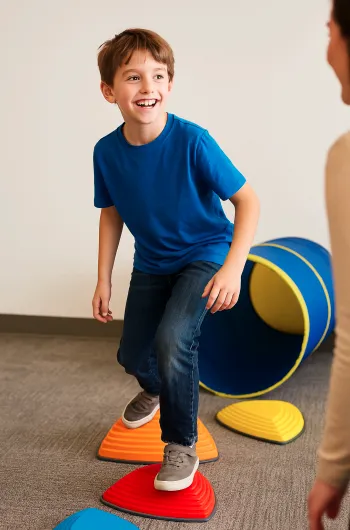
We develop strength, balance, and coordinated movement to support functional mobility and confident participation.
Gross motor challenges may show up as difficulty with posture, endurance, balance, or coordination during play, school, sports, or daily routines. When the body lacks stability or efficient movement patterns, tasks such as sitting upright, climbing, running, or carrying become more difficult and fatiguing. These challenges can limit participation and confidence across environments. OT supports gross motor development through strengthening, reflex-informed movement, balance activities, and coordination training to promote efficient, confident movement.
5. Visual-Motor & Visual-Perceptual Skills

We strengthen the connection between vision and movement to support learning, coordination, and daily tasks.
Visual-motor skills impact how individuals track, scan, coordinate eye–hand movement, and interpret visual information. Difficulties in this area can affect reading, handwriting, copying, sports performance, and visual endurance. These challenges are often mistaken for attention or behavioral concerns. Occupational therapy targets tracking, convergence, scanning, visual discrimination, and eye–hand coordination so visual input supports—rather than limits—functional performance.
6. Autonomic Nervous System (ANS) Regulation

We support regulation of the nervous system to promote calmer behavior, improved attention, and greater emotional resilience.
When the autonomic nervous system is stuck in fight, flight, or shutdown, everyday demands feel overwhelming and difficult to manage. This dysregulation can affect infants’ feeding and sleep, children’s emotional regulation and attention, and adults’ stress levels, pain, and fatigue. A dysregulated nervous system limits the body’s ability to learn, heal, and adapt. OT uses breathwork, rhythmic movement, sensory regulation strategies, and body-based techniques to support a calmer, more flexible nervous system.
BODYWORK SERVICES (OT-LED)
Bodywork focuses on supporting whole-person function by addressing the relationship between the nervous system, connective tissue, posture, breathing, and movement. Rather than treating isolated areas of discomfort, this approach looks at how tension patterns, movement restrictions, and regulation influence daily function and participation. Bodywork may include gentle, hands-on techniques that support nervous system regulation, mobility, and efficient movement patterns. Services are individualized and adapted across the lifespan, supporting infants with early regulation and comfort, children with posture, coordination, and body awareness, and adults with ease of movement and daily participation. Treatment emphasizes improved breath coordination, alignment, and nervous system balance as foundations for functional activity. Bodywork supports carryover into daily routines, movement, and self-care tasks. By addressing the body as an integrated system, this approach helps improve comfort, efficiency, and participation in everyday life.
1. Craniosacral Fascial Therapy (CFT)
A gentle hands-on therapy that releases fascial tension affecting comfort, movement, regulation, and function.
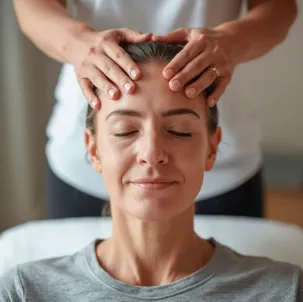
Fascial tension can contribute to feeding difficulties, head shape concerns, postural imbalance, headaches, jaw tension, chronic pain, and nervous system dysregulation across the lifespan. When the fascia is restricted, the body compensates, leading to inefficiency and increased stress. CFT gently addresses these restrictions to support improved mobility, comfort, breathing patterns, and regulation. This whole-body approach benefits infants through adults by helping the body function with greater ease.
2. Torticollis & Postural Asymmetry Treatment
We support symmetrical movement, cervical mobility, and balanced posture through gentle bodywork and developmental strategies.
Torticollis and postural asymmetry are most commonly identified in infancy but can influence movement patterns well beyond early development. Asymmetry may affect head shape, tummy time tolerance, rolling, sitting, vision, jaw alignment, and long-term posture. When not addressed, compensatory patterns can persist into childhood and adulthood. Our approach combines gentle manual therapy, CFT, positioning, and movement strategies to promote symmetry and support efficient motor development.
3. TummyTime! Support
We help families make tummy time comfortable, successful, and developmentally supportive.

Many infants struggle with tummy time due to tension, reflux, retained reflexes, or discomfort in prone positioning. Avoidance of tummy time can limit head control, airway alignment, visual development, and early strength. TummyTime\!TM support identifies why tummy time is difficult and provides individualized strategies, positioning, and playful routines. This approach helps infants build strength and confidence while reducing stress for both babies and caregivers.
4. TMJ & Orofacial Tension Therapy
We address jaw and facial tension that affects feeding, breathing, posture, and comfort.
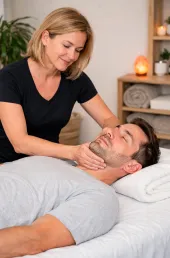
TMJ and orofacial tension can impact infants through feeding inefficiency or facial asymmetry, children through mouth breathing or headaches, and teens and adults through clenching, jaw pain, and migraines. Because the jaw is closely connected to posture, airway function, and the nervous system, dysfunction in this area often affects the whole body. OT-led TMJ therapy uses gentle bodywork, postural alignment, and breath–jaw coordination to restore comfort and efficient movement patterns.
5. Pelvic Floor Therapy (External Only)
We support pelvic floor mobility and breath–core coordination to improve comfort, stability, and participation in daily life.
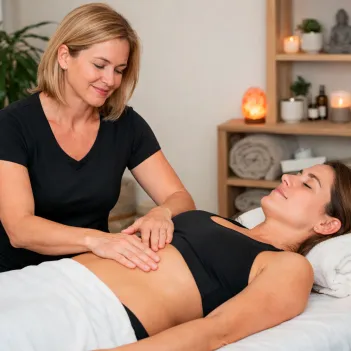
Pelvic floor challenges can affect infants through discomfort or constipation, and women through pain, leakage, core instability, or reduced comfort during daily tasks and intimacy. These difficulties often impact ADLs and IADLs such as toileting, lifting, childcare routines, exercise, household responsibilities, and sexual wellness. Because the pelvic floor works closely with breathing, posture, fascia, and the nervous system, dysfunction can limit overall participation and quality of life. Our external pelvic floor therapy uses gentle fascial work, breath–core coordination, mobility techniques, and functional strengthening to support confident, comfortable engagement in meaningful activities.
CONTACT US
Hours
Monday - Thursday 8:00am - 7:00pm
Friday 8:00am - 1:00pm
Saturday by appointment only







Copyright © 2026. Advanced Therapy & Wellness Center | All Rights Reserved. Created by Moza-Bella, LLC
CONTACT US
Hours
Monday - Thursday 8:00am - 7:00pm
Friday 8:00am - 1:00pm
Saturday by appointment only
Copyright © 2026. Advanced Therapy & Wellness Center | All Rights Reserved. Created by Moza-Bella, LlC