Why Myofunctional Therapy and Speech Therapy Work Better Together
Clare Travers MOT, TTM, CPRCS ·
Looking Beyond the Symptoms
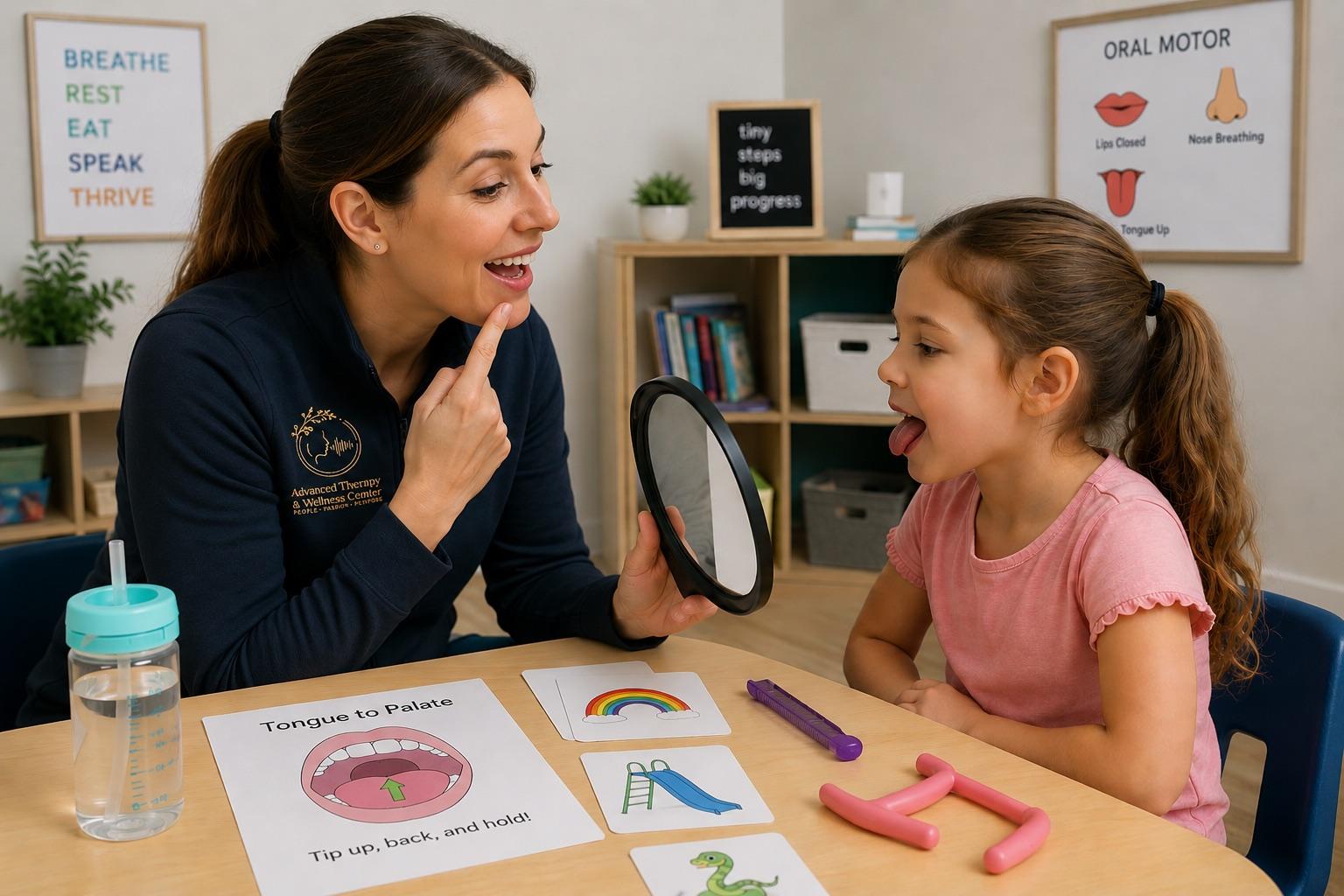
Many children are referred to speech therapy because of challenges with speech sounds, feeding, chewing, swallowing, drooling, or oral habits.
While traditional speech therapy is highly effective for addressing these concerns, there are times when progress seems slower than expected or challenges continue despite consistent intervention.
When that happens, it may be helpful to look beyond the symptom itself and examine the underlying oral function.
This is where myofunctional therapy can play an important role.
At Advanced Therapy and Wellness Center, we often use a whole-body perspective to understand how breathing, tongue posture, oral muscle coordination, and nervous system regulation may be influencing a child's feeding and communication skills.
What Is Myofunctional Therapy?
Myofunctional therapy focuses on improving the function and coordination of the muscles of the:
- Tongue
- Lips
- Jaw
- Face
- Airway
The goal is to establish healthy patterns that support everyday function, including:
- Nasal breathing
- Lip closure at rest
- Proper tongue resting posture
- Efficient chewing
- Coordinated swallowing
- Balanced oral muscle use
These skills form the foundation for many activities children perform throughout the day.
Why Oral Function Matters
The tongue, lips, jaw, and airway do much more than help us speak.
They play a critical role in:
- Breastfeeding and bottle feeding
- Chewing and eating solid foods
- Swallowing safely and efficiently
- Speech production
- Facial growth and development
- Breathing during sleep and wakefulness
When oral structures are not functioning efficiently, children may develop compensations that affect multiple areas of development.
Research and clinical literature consistently emphasize the importance of tongue mobility, oral coordination, and oral motor function for feeding and swallowing success.
Common Feeding Concerns That May Benefit from a Myofunctional Perspective
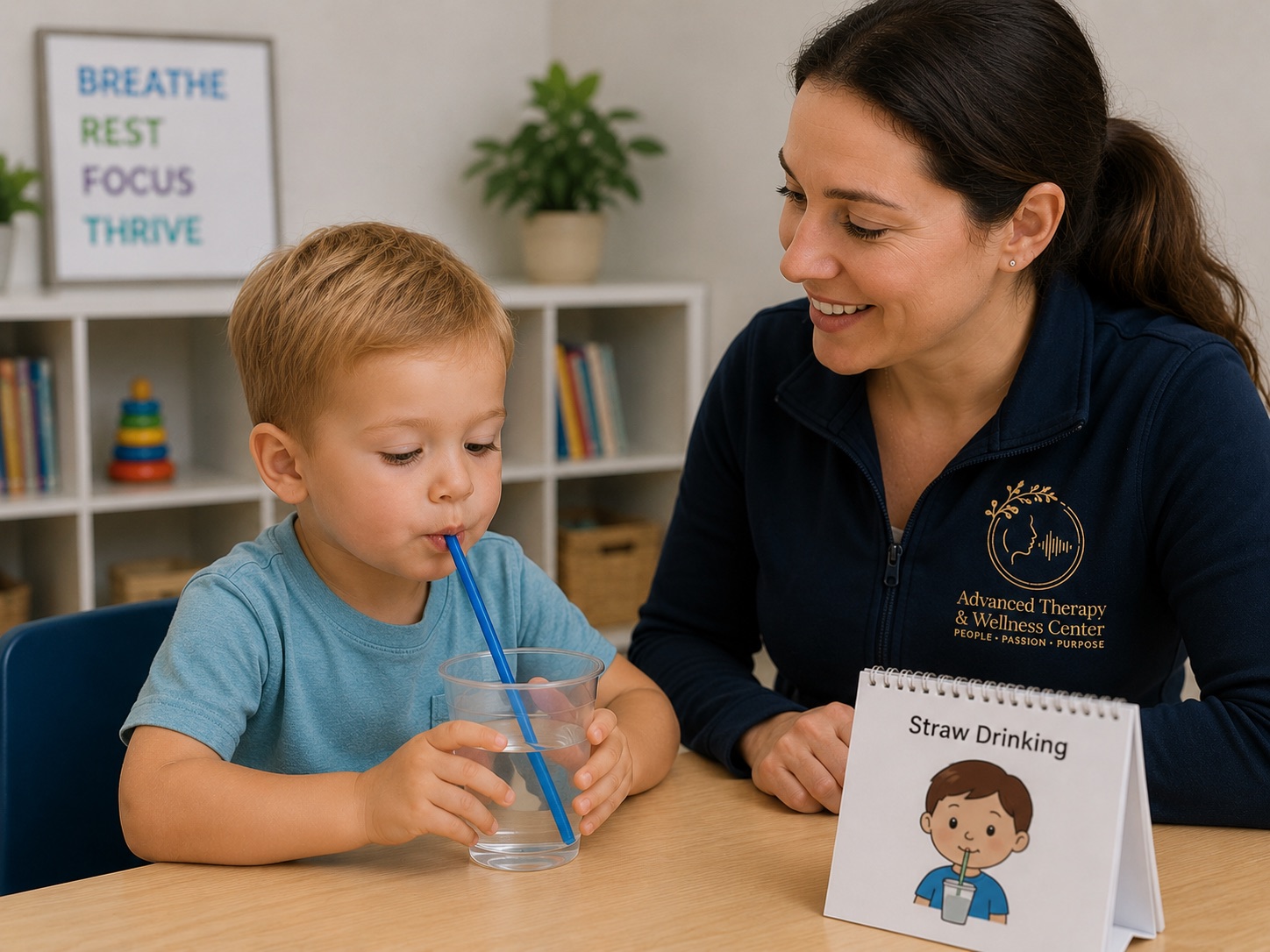
Children who experience oral dysfunction may demonstrate:
- Difficulty transitioning to solid foods
- Gagging with textures
- Pocketing food in the cheeks
- Messy eating
- Inefficient chewing
- Prolonged mealtimes
- Difficulty managing food within the mouth
Early feeding development relies heavily on coordinated sucking, swallowing, breathing, and oral reflex integration. These foundational skills support later feeding and oral motor development.
By addressing underlying oral patterns, myofunctional therapy can help support the skills needed for more efficient feeding.
Common Speech Concerns That May Benefit
While not every speech disorder involves oral dysfunction, some children demonstrate:
- Persistent articulation difficulties
- Lisping
- Reduced speech clarity
- Difficulty maintaining speech gains
- Excessive drooling
- Open-mouth resting posture
In these situations, examining oral rest posture, tongue function, and breathing patterns may provide valuable information that supports traditional speech therapy goals.
Rather than replacing speech therapy, myofunctional therapy can help strengthen the foundation upon which speech skills are built.
The Breathing Connection
One of the most overlooked contributors to feeding and speech development is breathing.
Healthy breathing typically occurs through the nose.
Chronic mouth breathing can influence:
- Tongue posture
- Lip strength
- Facial development
- Sleep quality
- Oral muscle balance
- Speech production
Mouth breathing has been associated with improper tongue positioning, oral muscle imbalance, and speech concerns, highlighting the importance of evaluating airway and breathing habits as part of a comprehensive assessment.
Why Combining Therapies Often Makes Sense
Traditional speech therapy focuses on communication, speech sounds, language, feeding skills, and functional participation.
Myofunctional therapy focuses on optimizing the oral structures and movement patterns that support those skills.
Together, they can help address both:
The Skill
What a child is trying to do.
The Foundation
How the body is supporting that skill.
When both are considered, children often develop more efficient and sustainable patterns for feeding, breathing, and communication.
A Whole-Body Approach to Development
At Advanced Therapy and Wellness Center, we recognize that feeding and speech challenges rarely exist in isolation.
Breathing, oral posture, reflex development, sensory processing, motor coordination, and nervous system regulation all influence how children function throughout their day.
By identifying and addressing underlying contributors, we can help children build the foundation needed for meaningful participation at home, in school, and in everyday life.
Ready to Learn More?
If your child struggles with feeding, speech clarity, mouth breathing, oral habits, or oral motor coordination, a comprehensive evaluation can help identify factors that may be contributing to these challenges.
Contact Advanced Therapy and Wellness Center to learn how speech therapy and myofunctional therapy may work together to support your child's development and functional success.