Bodywork & Craniosacral Fascial Therapy
Bodywork is hands-on treatment that addresses soft tissue tension and movement restrictions that can affect comfort and participation in daily life. At Advanced Therapy & Wellness Center, occupational therapy-led bodywork, including craniosacral fascial therapy (CFT), is individualized care for infants, children, teens, and adults, whether you are seeking support for yourself or your child.

Tension and compensatory movement patterns can involve multiple areas of the body. We look at how the head, jaw, neck, trunk, and surrounding tissues work together and how those patterns affect activities such as feeding, chewing, speaking, moving, working, and resting.
Signs bodywork may help
- Jaw clenching, facial tension, or discomfort with chewing
- Neck, shoulder, or back tension that interferes with daily activities
- Limited movement or difficulty finding comfortable positions
- Postural asymmetry or persistent compensatory movement patterns
- Tension associated with oral function or tongue-tie care
- Infant feeding difficulties, head-turning preferences, or discomfort during tummy time
Who it helps
We work with infants, children, teens, and adults. Treatment is individualized around your symptoms, movement patterns, and functional goals. Bodywork may be part of an occupational therapy plan or coordinated with feeding, speech, or myofunctional therapy when appropriate.
What a session looks like
We begin by discussing your concerns and assessing how tension and movement restrictions affect your daily activities. Treatment may include gentle CFT, other hands-on soft tissue techniques, positioning, and guided movement. Techniques and positioning are adapted to your age, comfort, and response.
You may also receive individualized strategies to use between visits. For infants and children, caregivers participate and learn ways to support comfortable movement at home.
We track progress through meaningful changes in comfort, movement, and everyday function. Your goals guide treatment and help us determine whether the approach is helping.
What's included
Open any card to see why it matters and what treatment looks like.
Craniosacral fascial therapy (CFT)
Gentle, hands-on treatment that addresses tension and restrictions in fascia, the connective tissue that extends throughout the body, with individualized care for infants, children, and adults.
Craniosacral fascial therapy (CFT)
Gentle, hands-on treatment that addresses tension and restrictions in fascia, the connective tissue that extends throughout the body, with individualized care for infants, children, and adults.
Why it matters
Tension through the head, jaw, neck, and body can affect comfort, movement, and everyday activities at any age. For infants, treatment may support feeding, head turning, and comfort during positioning and tummy time. For children, we address restrictions that may interfere with posture, coordination, play, and daily routines. For adults, treatment may address jaw, neck, and body tension that affects chewing, speaking, comfortable movement, work, and rest.
What it looks like
The therapist uses gentle contact at the head, jaw, and other areas of the body, adapting treatment to each person's needs, comfort, and response. Infants may receive treatment in a caregiver's arms or on a mat, with positioning and movement incorporated as appropriate. Children may participate through supported positions and purposeful play. Adults receive treatment in comfortable positions, with guided movement and strategies for daily activities when helpful. Progress is assessed through individualized goals for comfort, mobility, and function.

Torticollis & postural asymmetry
Treatment for neck tightness, head-turning preference, and the flat spots and feeding struggles that ride along with them.
Torticollis & postural asymmetry
Treatment for neck tightness, head-turning preference, and the flat spots and feeding struggles that ride along with them.
Why it matters
A baby who always looks one way is loading one side of the skull, one side of the jaw, and one nursing position. Untreated, that asymmetry can affect head shape, feeding, and later motor milestones. Treated early, it usually resolves quickly.
What it looks like
We assess range of motion, release the tight side with gentle hands-on work, and coach you on positioning, carrying, and play setups that reward turning the other way. You get a short daily routine that fits into diaper changes and floor time.

TummyTime! Method
Certified TummyTime Method sessions that turn the most-dreaded part of a baby's day into productive developmental time.
TummyTime! Method
Certified TummyTime Method sessions that turn the most-dreaded part of a baby's day into productive developmental time.
Why it matters
Tummy time drives neck strength, mouth and airway development, and the crawling chain, but a baby who screams through it isn't developing, they're just miserable. Usually there's a reason for the protest: tension, reflux, or reflexes that make the position feel unsafe.
What it looks like
We find the reason, treat it, and rebuild tummy time in graded positions your baby can actually tolerate: on your chest, over a roll, on an incline. You leave with a plan that makes tummy time shorter, more frequent, and no longer a fight.
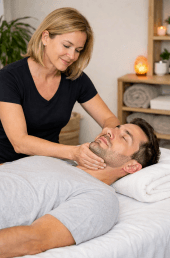
TMJ & orofacial tension
Individualized, hands-on treatment for jaw, facial, and neck tension that affects feeding, oral function, or comfort in infants, children, and adults.
TMJ & orofacial tension
Individualized, hands-on treatment for jaw, facial, and neck tension that affects feeding, oral function, or comfort in infants, children, and adults.
Why it matters
The jaw and surrounding muscles support sucking, chewing, swallowing, and speaking. For infants, tension may contribute to difficulty latching, maintaining a comfortable feeding position, or coordinating oral movements. For children, it may affect chewing, speech, and comfort during meals and daily activities. Adults may experience jaw clenching, clicking, facial discomfort, or tension that interferes with eating, speaking, and rest. We assess these concerns within the broader relationship between the jaw, neck, posture, and body.
What it looks like
Gentle hands-on work addresses the jaw, cheeks, neck, and related areas, with techniques adapted to each person's needs and tolerance. Infant treatment includes caregiver guidance to support feeding and positioning. Children may participate through guided movement and age-appropriate activities. Adults may receive targeted bodywork alongside strategies for jaw movement, posture, and daily habits. When appropriate, treatment is coordinated with feeding, speech, or myofunctional therapy, and individualized home techniques support progress between visits.
Frequently asked questions
What is craniosacral fascial therapy?
Craniosacral fascial therapy (CFT) is a very gentle, hands-on technique that releases tension in the fascia, the connective tissue that runs throughout the body. At ATWC it is provided by an occupational therapist with specialized training, for infants, children, teens, and adults, often alongside feeding, tongue-tie, or myofunctional care.
Is bodywork safe for newborns?
Yes. The pressure used with infants is extremely light, roughly the weight of a coin, and the therapist follows the baby's cues throughout. Parents stay present for the entire session.
Why does my baby need bodywork before or after a tongue-tie release?
A restricted tongue creates compensations through the jaw, neck, and body, and those compensations don't disappear on their own when the tie is released. Bodywork before a release prepares the tissue, and bodywork after helps the baby settle into new, easier movement patterns.
How many sessions does bodywork take?
Most infants show meaningful change within three to six sessions, though the plan depends on what we find and how feeding and movement respond. This is function-driven therapy, and we reassess against concrete goals every visit.
Is this the same as chiropractic care?
No. Bodywork at ATWC is occupational-therapy-led soft tissue work; there is no joint manipulation or adjustment. We do collaborate with chiropractors, IBCLCs, and release providers when a family's team includes them.
Does insurance cover bodywork?
ATWC is in-network with BCBS PPO, and superbills are provided for out-of-network plans. Call 815-782-4196 and we'll help you check your specific benefits.
Related at ATWC
 Clare Travers