Why Co-Treats Matter: How OT and SLP Working Together Creates Better Outcomes for Children
Clare Travers MOT, TTM, CPRCS ·
When a child struggles with feeding, communication, attention, regulation, coordination, or daily routines, families are often surprised to learn that these challenges are rarely isolated to just one system in the body.
A child who has difficulty speaking clearly may also struggle with posture, breathing, sensory processing, or motor planning. A child who avoids foods may also have nervous system dysregulation, oral motor weakness, or retained reflex patterns affecting coordination and feeding.
That's why collaborative therapy matters.
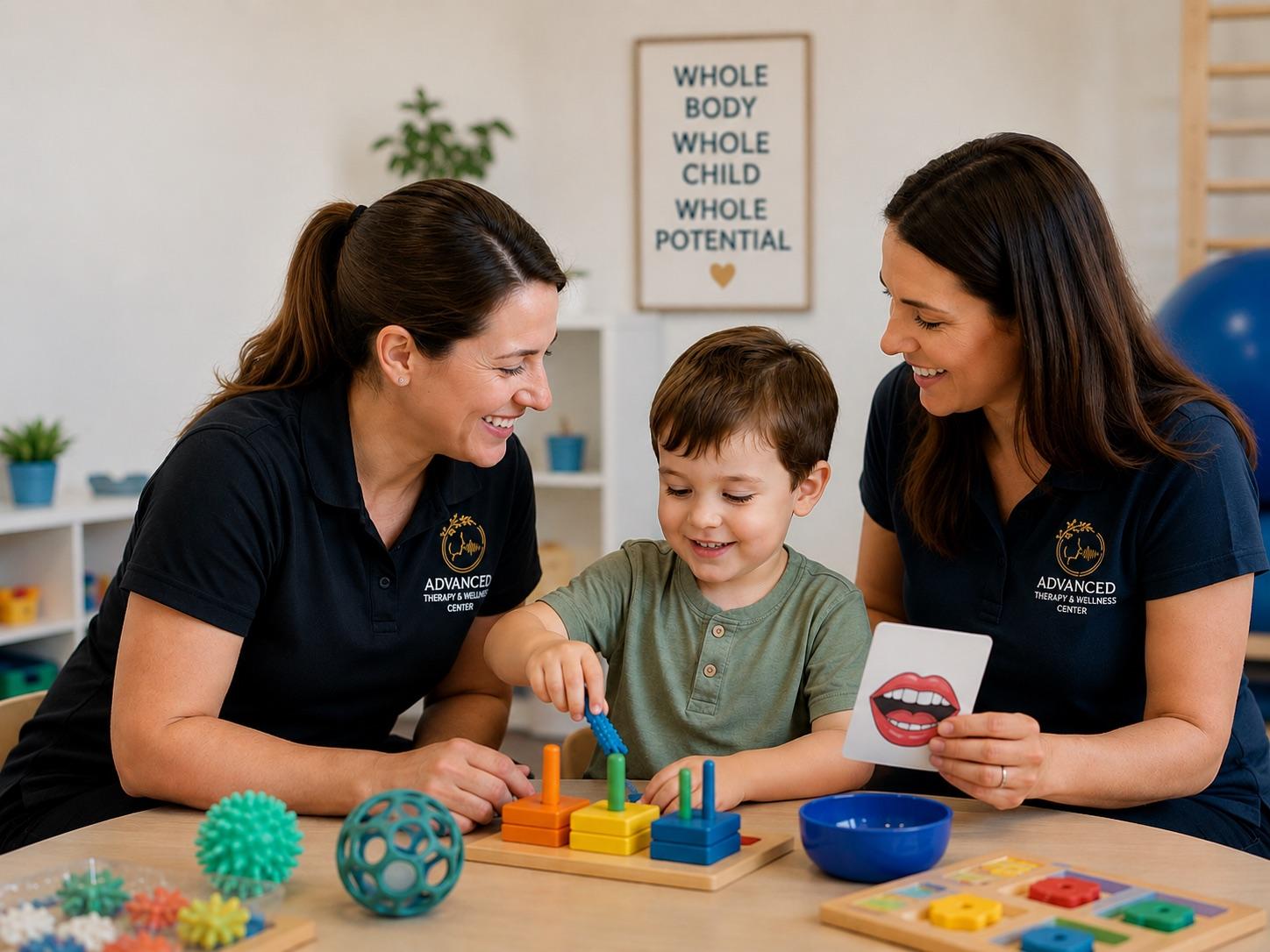
At Advanced Therapy and Wellness Center, Occupational Therapists (OTs) and Speech-Language Pathologists (SLPs) often work together during co-treatment sessions because children make the best progress when we address the whole child, not just isolated symptoms.
What Is a Co-Treat?
A co-treat is a therapy session where two specialists work together toward shared functional goals.
In pediatric therapy, this often means an OT and SLP collaborating during the same session to support a child's:
- Communication
- Feeding and swallowing
- Regulation
- Sensory processing
- Attention
- Motor coordination
- Breathing
- Postural control
- Emotional participation
- Daily life skills
Instead of separating the body into "speech problems" or "motor problems," co-treats recognize that development is deeply connected.
Why OT and SLP Work So Well Together
Speech and language development does not happen in isolation.
A child needs:
- Stable posture
- Nervous system regulation
- Body awareness
- Breath support
- Oral motor coordination
- Sensory processing
- Motor planning
- Attention and engagement
before communication can truly thrive.
Similarly, occupational therapy goals often depend on communication, feeding, oral motor control, and regulation strategies that SLPs specialize in.
When therapists collaborate in real time, children often progress more efficiently because interventions support the same nervous system pathways simultaneously.
The "Why" Behind Better Progress
1. Regulation Comes First
Children learn best when they feel safe, calm, and organized.
OTs frequently help regulate the nervous system through:
- Sensory input
- Movement
- Reflex integration
- Postural activation
- Body awareness activities
Once a child becomes more regulated, SLP goals like:
- Attention to language
- Speech production
- Feeding
- Social communication
- Breath coordination
often become much easier.
This whole-body approach recognizes that communication is not just about words. It is deeply connected to the nervous system.
2. Posture Impacts Speech and Feeding
Many children with speech or feeding challenges also struggle with:
- Core weakness
- Poor postural stability
- Open mouth posture
- Mouth breathing
- Difficulty coordinating breathing and swallowing
Healthy breathing, oral posture, and feeding patterns are connected to overall body organization and muscle coordination.
OTs help build the foundational stability and sensory-motor control needed for SLPs to address:
- Oral motor skills
- Feeding efficiency
- Speech clarity
- Breath support
- Coordination of sucking, swallowing, and breathing
Research and clinical resources continue to highlight the importance of integrated feeding and oral motor support.
3. Sensory Processing Affects Communication
Some children avoid talking, eating, or participating not because they "won't," but because their sensory systems are overwhelmed.
Children may experience:
- Sound sensitivity
- Oral sensitivities
- Difficulty with touch or textures
- Movement-seeking behaviors
- Trouble filtering environmental input
An OT may help organize the sensory system while the SLP builds:
- Language
- Social interaction
- Feeding skills
- Speech production
Together, therapy becomes more functional and less frustrating for the child.
4. Feeding Is Never "Just Feeding"
Feeding is one of the clearest examples of why co-treats matter.
Successful feeding requires:
- Reflex integration
- Oral motor coordination
- Sensory regulation
- Postural stability
- Breathing coordination
- Tongue function
- Motor planning
- Emotional safety
Therapeutic approaches for feeding often include oral motor support, tongue mobility work, sensory integration, and breathing coordination.
When OT and SLP collaborate during feeding therapy, children often gain:
- Improved oral coordination
- Better endurance
- Increased food variety
- More efficient chewing and swallowing
- Reduced stress during meals
- Improved regulation during feeding
Instead of treating isolated symptoms, co-treats support the entire feeding system.
Functional Progress Families Often Notice
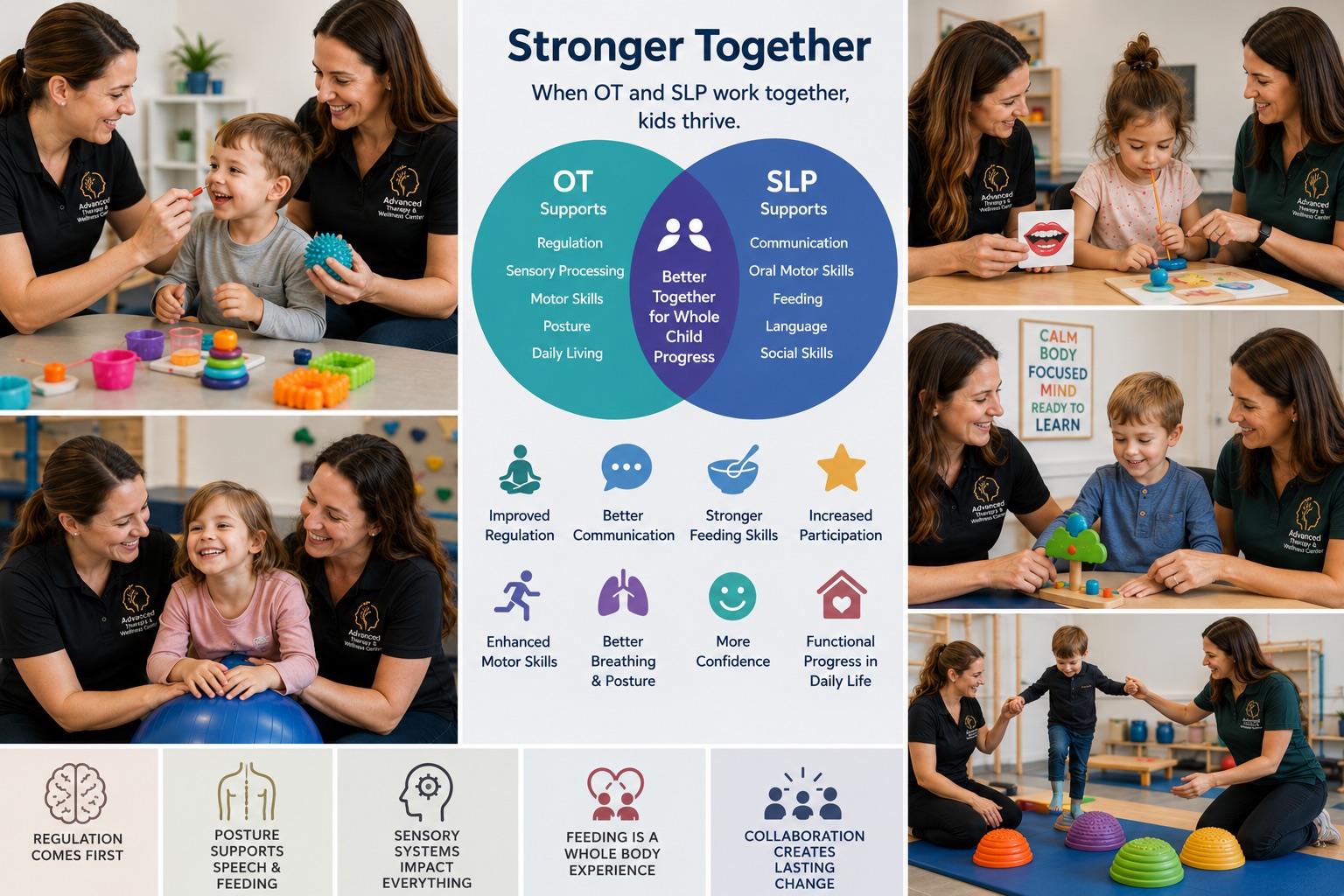
When OT and SLP collaborate, families commonly report improvements in:
- Mealtime participation
- Emotional regulation
- Sleep quality
- Attention and focus
- Speech clarity
- Body awareness
- Coordination
- Confidence
- Social engagement
- Independence in daily routines
Most importantly, therapy becomes more meaningful because goals are connected to real life.
Collaboration Helps Children Feel More Successful
For many children, transitioning between multiple therapy sessions can feel overwhelming.
Co-treats can:
- Reduce transitions
- Improve carryover between skills
- Increase engagement
- Create more cohesive therapy experiences
- Support faster integration of skills into daily life
Children often feel more successful when their therapists are working together toward shared functional outcomes.
A Whole-Body Approach to Development
At Advanced Therapy and Wellness Center, we believe children make the best progress when we look beyond isolated symptoms and understand the why behind challenges.
Communication, feeding, regulation, posture, breathing, sensory processing, and motor coordination are all connected.
When Occupational Therapy and Speech Therapy work together, therapy becomes more integrated, more functional, and more supportive of long-term development.
If you have questions about whether co-treatment may benefit your child, our team is here to help guide you toward the right support for your family.